Impact
Spade test
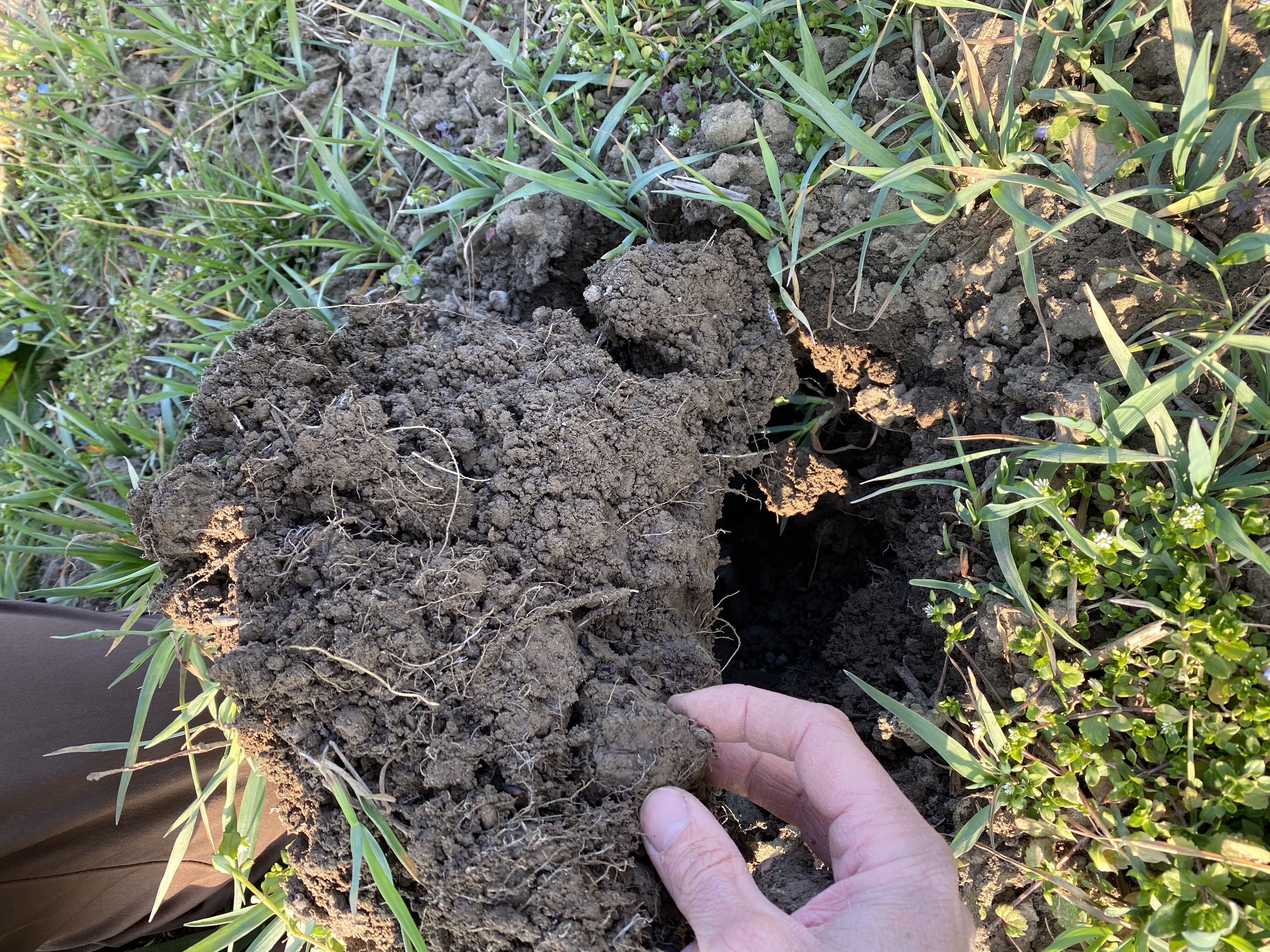
Twice a year we assess the soil structure of our strips directly in the field.
What the spade test measures
For a spade test, a trained person digs out a spade-depth block of soil and assesses its structure directly in the field. The core of the assessment is the structure — how the soil breaks, and whether crumbs have formed. This is rated on a five-point scale. Alongside it we note the depth of crumb structure, earthworm and soil life, and rooting.
How we measure
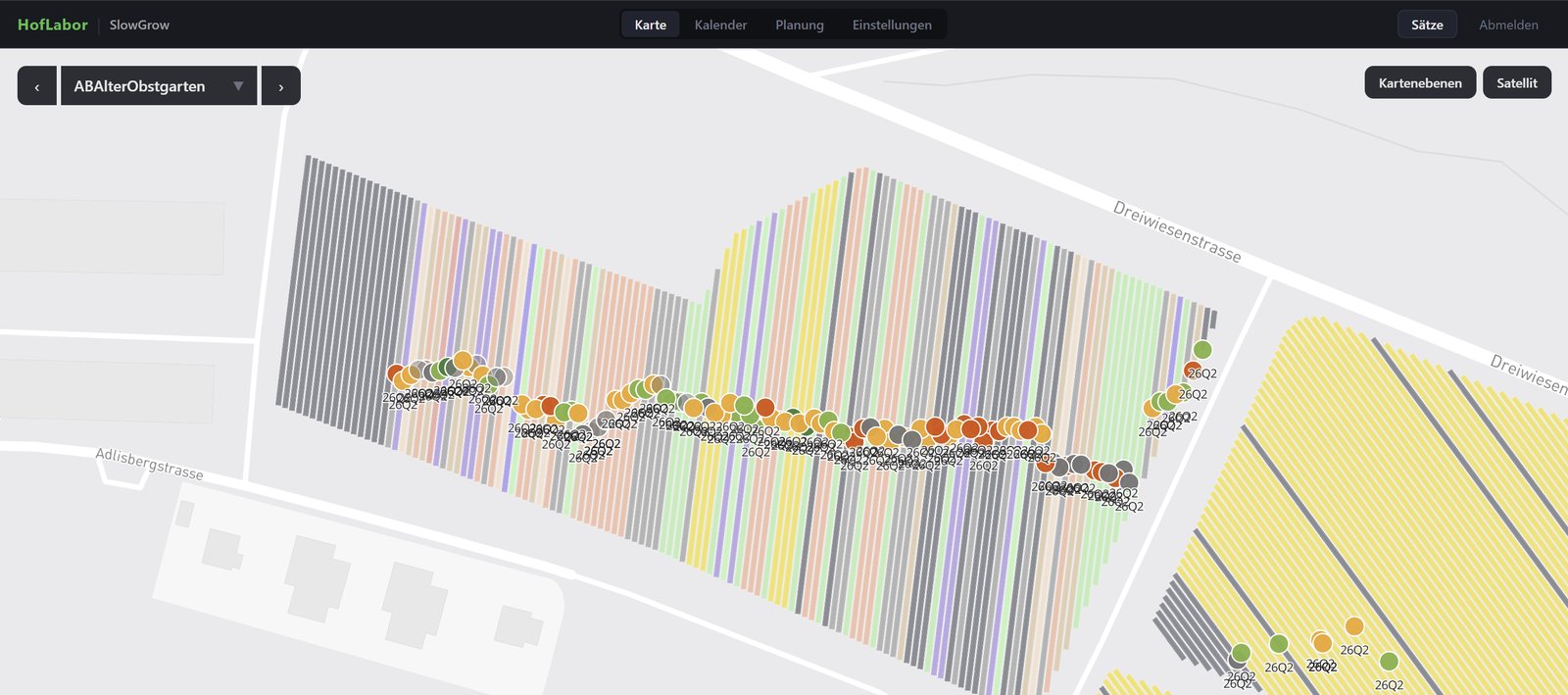
We record every spade test directly in our field app and assess a majority of the more than 1,000 strips twice a year. Over the years this builds a dataset meant to show what actually drives soil quality.
Our scale
- 1Very poor: strong compaction, few pores, poor rooting.
- 2Poor: weakened structure, limited rooting.
- 3Moderate: partly stable crumbs, compaction possible.
- 4Good: stable crumbs, good rooting, little compaction.
- 5Very good: optimal aggregate state, high biological activity.
What can we learn from the spade test?
Thousands of spade tests have accumulated since 2022. It is very clearly visible that soil quality changes from strip to strip — that the sequence of crops and the cultivation work therefore have an important influence.
What we are working on is a systematic analysis to understand, for example, the influence of winter cover, mulch or tillage.
That said, the spade test remains a subjective human rating that is hard to keep consistent across years and across fields with different soils. We can only make robust, comparative claims once we have a better handle on this measurement uncertainty.